
Guides4 min readIllustrative visual
Net metering, explained simply
What net metering is, how it works with a grid-connected solar system, and what the approval process generally involves.
By the AKE Power team
If your solar system is connected to the grid, there will be times when the panels produce more electricity than your building is using — a sunny afternoon with few appliances on, for example. Net metering is the arrangement that lets that surplus flow into the grid and be accounted for.
How it works
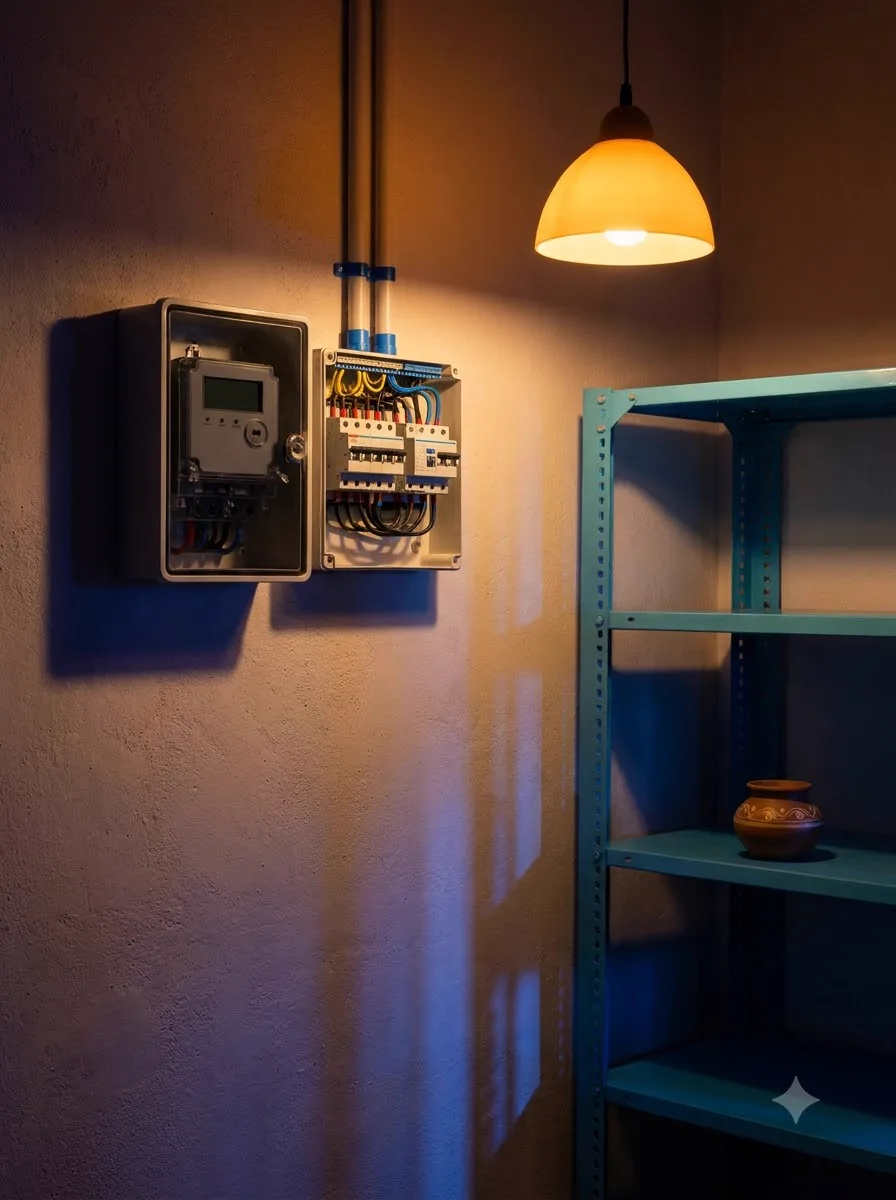
Under net metering, a meter that can record electricity in both directions measures what you import from the grid and what you export to it. Your bill is then based on the difference between the two, according to the rules of your electricity distribution company.
Which systems it applies to
Net metering is relevant to grid-connected systems — on-grid and hybrid. An off-grid system has no grid connection, so there is nothing to export.
What the approval generally involves
- An application to your electricity distribution company for the solar connection.
- Details of the system and the equipment being installed.
- An inspection of the installation.
- Installation of a suitable meter before the system is connected for export.
The exact steps, documents, fees and timelines are set by your electricity distribution company and can change, so we confirm the current process for your connection before we start.
Net-metering approval is one of the stages we handle as part of a turnkey installation, alongside the site audit, design, installation and maintenance.
Talk to us
Want advice for your own roof?
Book a site assessment and we'll recommend a system for your site.